


Dr. Jerry Nickelsburg
Chair, Council of Economic Advisors
The State Controller's Council of Economic Advisors provides independent analysis and recommendations on economic trends, fiscal conditions, and long-term challenges impacting California.
— Controller Malia M. Cohen
Chair, Council of Economic Advisors
Jerry Nickelsburg joined the UCLA Anderson School of Management and the UCLA Anderson Forecast in 2006. From 2017 to 2025, he served as faculty director of the Forecast and from 2025 to present as senior economist and director emeritus. Nickelsburg plays a key role in the economic modeling and forecasting of the national, California and regional economies. He has conducted special studies for the UCLA Anderson Forecast on manufacturing, trade, and labor markets.
He earned a Ph.D. in economics at the University of Minnesota and was a Fulbright Research Scholar in Ecuador and Peru. His current research is on transportation economics focusing on the development of new data and the application of economic theory and statistical methods to sector-specific policy issues.
Nickelsburg taught economics in UCLA Anderson’s MBA program, with a focus on business forecasting and international business economics. He travels regularly with students to Asia as professor and advisor in global immersion courses.
Formerly a professor of economics at the University of Southern California, Nickelsburg has held executive positions with McDonnell Douglas, FlightSafety International and Boeing during a 15-year span in the aviation business. He developed forecasting tools for the Federal Reserve Board of Governors and has advised banks, investors, and financial institutions. From 2000 to 2006, he was the managing principal of Deep Blue Economics, a consulting firm he founded.
Nickelsburg is frequently cited in the national media. He has published more than 100 scholarly and popular articles on economic policy, monetary economics, statistics, labor economics and industrial organization. He is the author of two books on monetary economics and exchange rates.

Dr. Mira Farka is Professor of Economics at California State University, Fullerton, and Co-Director of the Woods Center for Economic Analysis and Forecasting. She is a financial economist specializing in monetary policy, financial markets, and applied macroeconomics, with expertise in how policy decisions influence asset prices, credit conditions, and broader economic activity.
Dr. Farka’s work has appeared in leading peer-reviewed journals, including the Journal of Business & Economic Statistics, Journal of Financial Research, European Financial Management, Financial Review, and Journal of Empirical Finance. Her scholarship connects academic analysis with real-world policy issues, including financial stability, financial market responses to central bank actions, and broader macro-financial linkages. She has received numerous awards for scholarly excellence, named Outstanding Faculty of the College of Business and Economics and has been recognized among Orange County’s 500 Most Influential People both in 2022 and 2023.
Dr. Farka plays a leading role in regional economic forecasting and policy analysis. Through the Woods Center, she leads major regional economic forecast conferences and develops economic forecasts and policy analysis used by business leaders, policymakers, and public agencies. She has been awarded numerous grants and externally funded projects to conduct economic forecasting and analysis for government entities and regional organizations, providing applied insights on growth, trade, and regional economic conditions.
Dr. Farka is a frequent keynote speaker on economic conditions and policy developments and is regularly invited to brief business, government, and professional audiences. Her expertise is often sought by the media, and she has been quoted in outlets including NPR, the Los Angeles Times, Orange County Register, Orange County Business Journal, and other regional and national sources.
Prior to joining academia, Dr. Farka served as a Senior Economist at Deutsche Bank in New York, where she developed macroeconomic forecasting models and presented analyses to institutional investors, central banks, international organizations, and the media. Her work was part of a globally recognized foreign exchange research team ranked among the top in the industry during her tenure.
Dr. Farka holds a Ph.D. in Economics from Columbia University, with concentrations in financial economics, monetary policy, and applied macroeconomics.
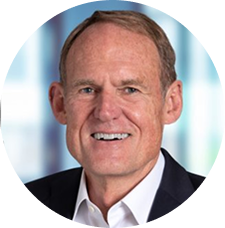
Sean Randolph is Senior Director of the Bay Area Council Economic Institute, where he served as President and CEO from 1998–2015.
The Economic Institute is a public-private partnership of business, labor, government and higher education that works to foster a competitive economy in California and the San Francisco Bay Area, including San Francisco, Oakland and Silicon Valley. It produces authoritative analyses on economic policy issues affecting the region and the state, including infrastructure, science and innovation, energy, and global business, and mobilizes California and Bay Area leaders around targeted policy initiatives. In this capacity he also provides executive management to the Bay Area Science and Innovation Consortium (BASIC), a regional science and technology organization composed of corporate head scientists, CTOs, and senior leaders in university research and federal and independent research laboratories.
Dr. Randolph previously served as director of international trade for the State of California (1994–98), where he directed international programs to stimulate exports and introduce California companies to overseas markets. Before service with the state, he was Managing Director of the RSR Pacific Group, an international business consulting firm specializing in Asia and Latin America, and before that served as International Director General of the Pacific Basin Economic Council (1988–1993), a 15-nation international organization of leading U.S., Asian, and Latin American corporations active in Asia-Pacific trade and investment.
His professional career includes extensive experience in the U.S. Government, where he served on Congressional staffs (1976–1980) and the White House staff (1980–1981). An Asia-Pacific expert, from 1981–85 he served in the Department of State on the Policy Planning Staff, as Special Adviser for Policy in the Bureau of East Asian and Pacific Affairs, and as Deputy/Ambassador-at-Large for Pacific Basin affairs. From 1985–88 he served as Deputy Assistant Secretary of Energy for International Affairs, managing nuclear non-proliferation, energy research, and global oil and gas issues.
Dr. Randolph holds a JD from the Georgetown University Law Center, a Ph.D. from the Fletcher School of Law and Diplomacy (Tufts and Harvard Universities), and a B.S.F.S. from Georgetown University’s School of Foreign Service, and studied at the London School of Economics.
He has served on numerous government, university, and non-profit boards and commissions and is currently a member of the District of Columbia Bar Association, San Francisco Bay Conservation and Development Commission (which he chaired from 2005–2012), and the Council on Foreign Relations. He also serves on the Steering Committee of the California Economic Summit
Dr. Randolph speaks frequently before business, government, and university audiences and writes for U.S. and international media on global, national, state and regional economic and policy issues. Married thirty years, in his private time he is an ocean kayaker and an avid ultramarathon and mountain runner.
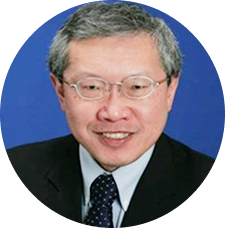
William Lee is the Chief Economist and Managing Director at Global Economic Advisors, a bespoke advisory and consulting firm. He provides perspective-shaping insights to businesses, investors, and government officials about economic and financial market developments.
Prior to his current role, Dr. Lee was the Chief Economist at the Milken Institute, where he led efforts to promote policies to improve capital market functioning, market access, and financial stability.
Before joining the Milken Institute, he served as Managing Director and Chief US Economist for Citigroup.
His extensive media coverage began during his tenure at Citi and has since grown. He is a frequent commentator on CNN, the BBC, Bloomberg, CNBC, and various national media outlets worldwide. Dr. Lee is often asked to provide insights into Federal Reserve policy, US-China trade tensions, and the economic ascent of India and broader Asia. He is widely recognized for his analysis of geopolitical developments—including the impact of rare earth monopolies, shifts in European-Chinese relations, and the risks surrounding global energy supply chains.
Dr. Lee’s extensive career includes nearly two decades at the International Monetary Fund (IMF), where he served as Deputy Division Chief, established the IMF’s Hong Kong office, and helped revise financial surveillance procedures. He also served as the IMF’s representative in Hong Kong from 2000 to 2003, Mission Chief for Singapore, and Deputy Division Chief on the US and German desks.
Before his tenure at the IMF, Dr. Lee was a Division Chief at the Federal Reserve Bank of New York and a staff economist at the Federal Reserve Board of Governors.
Dr. Lee holds a B.Sc. in Operations Research and a PhD in Economics, both from Columbia University.

Dr. Manfred Keil is the Inland Empire Economic Partnership’s Chief Economist. He is the Associate Director of the Lowe Institute of Political Economy and Associate Professor of Economics at Claremont McKenna College.
Dr. Keil has been involved in the analysis and forecasting of economic activity in the Inland Empire since the beginning of the project in 2009. His teaching duties at Claremont McKenna College involve statistics, econometrics, and macroeconomics. In addition, he has lectured at Claremont Graduate University, Pomona College, and Scripps College.
Professor Keil received his Ph.D. from the London School of Economics in 1985 and has been a Fulbright Scholar. He arrived in Claremont in 1995 after holding appointments in Montreal, Boston, and Essex, England. His research interests are in comparative economic performance of geographic areas, politico-economic interaction, and forecasting. He is involved in popularizing data science programs at the Claremont Colleges and has been the lead CMC faculty in the joint CMC-Yonsei University (Yonsei School of Business) program in Seoul, Korea, for the last seven years. In addition, he has been involved in teaching quantitative courses in the CMC Silicon Valley Program in the Bay Area.
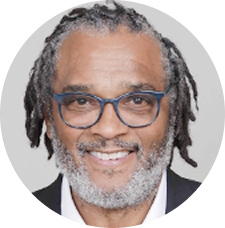
Dr. Fred McKinney earned his Ph.D. in economics from Yale University in 1983. Dr. McKinney has over 30 years of experience working with diverse businesses and large data sets. Dr. Fred McKinney was the Carlton Highsmith Chair for Innovation and Entrepreneurship and Director at the Peoples Bank Center for Innovation and Entrepreneurship at Quinnipiac University School of Business from 2018-2021. Dr. McKinney served as the Managing Director for Minority Business Programs at Tuck School of Business at Dartmouth College from 2015-2018. Prior to coming to Tuck, Dr. McKinney was the President and CEO of the Greater New England Minority Supplier Development Council from 2001-2015. Dr. McKinney taught full-time at the University of Connecticut School of Business from 1987 to 2001. At UCONN, Dr. McKinney taught economics, entrepreneurship and business statistics. Dr. McKinney worked as an economist at the White House, Council of Economic Advisers from 1977-78. Dr. McKinney has also served as a consultant to the Federal Home Loan Bank of San Francisco for 30 years.
Dr. McKinney has served as a consultant to dozens of Fortune 500 companies in corporate supplier diversity. Dr. McKinney has also worked with over 100 diverse business owners on developing winning marketing and operational strategies. Dr. McKinney has published five books on supplier diversity and small business development along with over 100 articles and editorials. His latest book, Critical Issues Facing America: Selected Essays from a Black Economist, 2016-2025, was released in November 2025 by Palgrave/MacMillan Press.
Dr. McKinney has served on numerous boards of directors, including Yale New Haven Healthcare’s Bridgeport Hospital, Bridgeport’s Habitat for Humanity, The Community’s Bank, Gateway Community College Foundation, AAA, Bridgeport Community Foundation, Fairfield County Community Foundation, the Connecticut Center for Arts and Technology, and Connecticut Voices for Children. Dr. McKinney served on the Boston Federal Reserve Board’s Community Advisory Committee.
Fred McKinney is the co-founder and principal of the economic consulting firm, BJM Solutions, LLC. BJM Solutions has worked with large and small organizations since 1999. Dr. McKinney also serves as an economic consultant to Eskaton Consulting, Montage Companies, Actum Consulting, Porter Brown Associates, and JKA Solutions.
Prior to joining academia, Dr. Farka served as a Senior Economist at Deutsche Bank in New York, where she developed macroeconomic forecasting models and presented analyses to institutional investors, central banks, international organizations, and the media. Her work was part of a globally recognized foreign exchange research team ranked among the top in the industry during her tenure.
Dr. McKinney also was the co-founder of Jamaica Gourmet Coffee Company (JGCC). JGCC was founded in 1984 in New Haven, Connecticut and is the oldest continuously operating Black-owned gourmet wholesale roaster in the United States. Dr. McKinney left the company in 1999. Dr. McKinney invented and patented (U.S. Patent Number 5,957,332) the “Bean Machine” based on his coffee experience. The machine dispensed whole bean coffee in a retail setting.

Sign up for updates, explore the strategic plan, or send us your feedback.